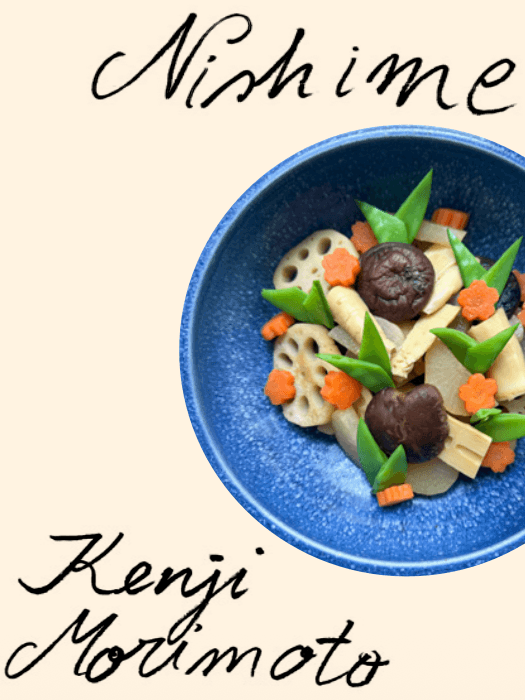
Nishime
This is my family’s recipe for nishime. It’s a popular Japanese dish during the winter months, nourishing and simple, and delivering on flavour. It’s also a dish that has been on my family’s new year’s day table for the past five generations. A lot of love goes into the prep so take your time with it. Elements can be made in advance and it keeps well in the fridge, and as this sauce is just so good you’ll soon realise other ingredients can work such as sweet potato, firm tofu, chicken thigh, etc. With distance from my childhood now a constant, it’s a dish I return to regularly, reminding me of home as well as the stories these dishes carry.

Ingredients
- 6shitake, dried
- 150 gramsbamboo shoots (takenoko) boiled or pre-packaged, cut into bite-sized pieces
- 300 gramsdaikon, peeled and cut lengthwise in half and then sliced
- 200 gramslotus root (renkon), if using fresh – peel and slice, other- wise defrost if frozen
- 1carrot, peeled and cut into rounds or use a flower cutter
- 50 gramsmangetout, trimmed with tough fibrous string removed, blanched and diagonally cut
- 0.5 tablespoonSesame Oil
- 360 millilitersshiitake dashi
- 4 tablespoonsMirin
- 1 tablespoonSugar
- 3 tablespoonsJapanese shoyu (soy sauce)
- MSG, optional
- Toasted Sesame Seeds
- Spring Onions, sliced
Instructions
- 1
Soak shiitake in 360ml boiling water for 30–60 min. Once rehydrated, squeeze the shiitake and reserve the shiitake liquid (or dashi). Cut them into bite sized pieces and add them to the rest of the prepared vegetables.
- 2
Stir fry veg including mangetout with sesame oil for 5–7 min. Add the remaining sauce ingredients and bring to a low simmer for roughly 10 minutes. Add an aluminium foil or parchment paper lid to ensure ingredients remain submerged and cook until the harder vegetables are fork tender.
- 3
Add a gentle pinch of MSG (if you want!) and plate up, with garnishes. This dish can be served warm or room temperature!
- 4
*If you want to use fish-based dashi instead, still soak the shiitake in boiling water but reduce the amount just so you have enough to cover the shiitake. Reserve the shiitake liquid which can be added to the final simmering.